
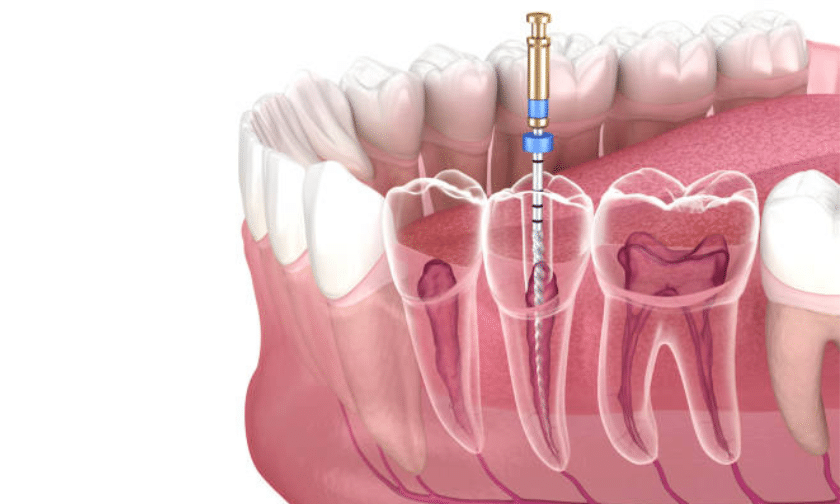
Tooth pain that lingers or hurts on biting often means the inner nerve is inflamed or infected. A root canal removes that infected tissue, disinfects the tiny canals, and seals the tooth so bacteria can’t return—letting you keep your natural tooth and get back to comfortable chewing.
When you may need it
-
Persistent toothache or pain while chewing
-
Sensitivity to hot/cold that doesn’t fade quickly
-
Gum swelling or a small pimple near the tooth
-
Tooth darkening, deep decay, crack, or trauma
Why choose us
-
Comfort-first: numbing gel, ultra-fine needles, slow, precise anaesthesia
-
Modern tech: digital X-rays, rubber-dam isolation, apex locators, rotary files
-
Efficient: many cases finished in 1–2 visits
-
Lasting strength: crown planning to prevent future cracks
How treatment works
-
Assessment – Exam and digital X-rays to confirm the diagnosis.
-
Anaesthesia & isolation – The tooth is fully numbed; a rubber dam keeps it clean and dry.
-
Cleaning – Infected pulp is removed; canals are shaped and thoroughly disinfected.
-
Sealing – Canals are filled with a biocompatible material and the tooth is sealed.
-
Restoration – A filling and usually a crown (especially for back teeth) to restore strength.
Typical chair time: about 45–90 minutes for straightforward teeth; complex roots or long-standing infection may need a brief second visit.
After-care
Mild tenderness for 24–48 hours is common; use prescribed pain relief if needed. Chew on the other side until your crown is placed. Brush and floss as normal; call us if pain or swelling increases.
